
SARMs & adjacent non-peptides
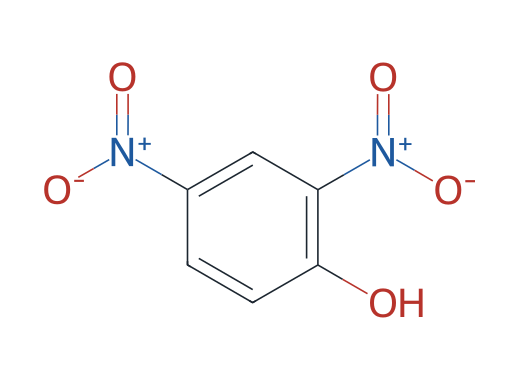
2,4-Dinitrophenol (DNP)
Also called DNP, 2,4-DNP, dinitrophenol, sodium dinitrophenolate, fat burner' yellow capsules
- US status
- Not approved
- DEA
- Not a controlled substance under the CSA; it is an industrial chemical (pesticide, herbicide, dye and wood-preservative uses)
- WADA
- S0 Non-approved substances, named on the 2026 List; prohibited at all times
- Class
- SARMs & adjacent non-peptides
Jump to doses reported ↓ Dose math calculator
What it is
2,4-Dinitrophenol (DNP) is a yellow industrial chemical, not a medicine. It has been used in munitions manufacture, and as a herbicide, pesticide, dye and wood preservative S1S15. It is not a peptide, a hormone or a steroid. The first death from DNP was reported in 1918 in a munitions worker, and a 1919 study of French munitions factories described 36 deaths from workplace exposure S1.
It was sold as a weight-loss drug in the US in the 1930s, after work at Stanford University reported that people taking it lost weight quickly S1. Reports of cataracts, blood disorders and deaths followed, and after the Federal Food, Drug, and Cosmetic Act of 1938 it was described as "extremely dangerous and not fit for human consumption" S1. FDA has never approved it for human consumption S14. It is now sold illegally online and at gyms, mostly as yellow powder in capsules or tablets, marketed at bodybuilders and at people trying to lose fat S1S16.
How it works
- It uncouples oxidative phosphorylation. Inside cells, mitochondria normally use a proton gradient across their inner membrane to make ATP, the body's energy currency. DNP is a weak acid that carries protons straight across that membrane, short-circuiting the gradient. ATP production falls while oxygen consumption and fuel burning rise, and the energy that would have become ATP leaves as heat S1S12.
- That is why it causes weight loss. The body burns fat and carbohydrate faster to try to keep ATP up. Reports from the 1930s described an average metabolic-rate rise of about 11% for every 100 mg taken regularly, and weight loss of up to about 1.5 kg a week S1.
- It is also why it kills. The same mechanism makes heat the body cannot shed. Unlike a fever, this heat is not produced by the brain's thermostat, so cooling drugs do not switch it off, and there is no antidote that reverses uncoupling S1S10. As ATP runs out, muscles become rigid, lactic acid builds up, and organs fail S1.
- The margin is the problem, not the mechanism. Dutch regulators put it bluntly: the amount in a single capsule sold online and an amount reported as lethal are separated by roughly a factor of ten S18.
Legal status
- FDA: Not approved for any use. FDA describes DNP as a toxic substance that is illegally marketed as a weight-loss product and is not approved by the FDA for any use, and its laboratory analysis has found DNP hidden in a product sold as a weight-loss supplement S15. FDA has never approved DNP for human consumption; selling it for human use is prosecuted as selling misbranded drugs, and a retired US physician who sold DNP online received a 33-month prison sentence in a case where a buyer died of DNP toxicity S14.
- Compounding: Not a drug substance eligible for compounding. It is a chemical with no human therapeutic approval anywhere S20.
- DEA: Not a controlled substance. That does not make it legal to sell for people to eat; it is unapproved and misbranded as a drug S14.
- "Research use only" or pesticide-grade labels: DNP has real industrial uses, so it can be bought as a chemical. A chemical-grade or research-grade label does not mean anyone has checked it for human use. It means the opposite.
- UK: DNP and compounds including sodium dinitrophenolate were added to the list of regulated poisons under the Control of Explosives Precursors and Poisons Regulations 2023. Since 1 October 2023 a member of the public who wants to import, acquire, possess or use DNP must hold a Home Office Explosives Precursors and Poisons licence, and selling it to the public without one is a criminal offence S16. The Food Standards Agency's National Food Crime Unit treats selling DNP for consumption as food crime S16, and its earlier public advice was that no product containing DNP should be taken at any level because the chemical is not suitable for human consumption S19.
- EU: Dutch customs interceptions of DNP capsules led the national food-safety authority's risk-assessment office to advise keeping DNP capsules off the market entirely and actively warning the public S18.
- Australia: DNP was up-scheduled in 2017; poison-centre exposures and deaths after that change were reported in the Medical Journal of Australia S5.
- WADA (sport): Named in S0, non-approved substances, prohibited at all times, in and out of competition S20.
What the research actually shows
Evidence: E. There is no modern trial of DNP for weight loss in people, and no approved product anywhere. The human literature is a toxicology literature: poison-centre series, case reports and autopsy findings. The research that does exist is about how people are harmed and how many die.
| Study | Design | People | What was measured | Result |
|---|---|---|---|---|
| Grundlingh et al 2011 S1 | Systematic review of published fatalities | 62 published deaths attributed to DNP | Doses, time course, peak temperature | Deaths from occupational exposure, weight-loss use and overdose; peak temperatures up to 43 °C; average time to hospital presentation 7–8 hours and average time of death about 14 hours |
| Potts et al 2021 S2 | Poison-centre records, UK and US, 2007–2018 | 204 systemic exposures (86 US, 118 UK) | Case fatality and predictors of death | Case fatality 11.6% (US) and 16.9% (UK); 86% of cases were under 40; independent predictors of death were acidosis, tachycardia, agitation or confusion, and hyperpyrexia |
| Kamour et al 2015 (National Poisons Information Service) S3 | UK poisons-service enquiries, 2007–2013 | 30 systemic exposures (27 male, median age 23.5) | Clinical features and outcome | 5 deaths (17%), four after acute overdose; fever 47%, tachycardia 43%, sweating 37%; enquiries rose from 3 in 2007–2011 to 22 in 2013 |
| Gziut and Thomas 2022 (with WHO) S4 | International poison-centre survey, Jan 2010 – Sep 2020 | 456 exposures reported by centres in 38 countries | Case numbers and fatality | Annual cases rose from 4 in 2010 to 71 in 2015; case fatality 11.9% where outcome was known |
| Cairns et al 2020 S5 | National poison-centre data, Australia | Exposures and deaths after the 2017 up-scheduling | Exposure and death counts | Reported in the Medical Journal of Australia; we cite the record, not a figure we did not read in full |
| Miranda et al 2006 S6 | Two autopsy case reports (Washington, California) | 2 deaths | Blood concentrations, autopsy findings | Markedly elevated temperature, rapid pulse and breathing, yellow staining of the organs; admission blood DNP 36.1 and 28 mg/L |
| Van Schoor et al 2018 S10 | Case report with pharmacology review | 1 death, healthy 25-year-old | Response to cooling and dantrolene | Took two tablets; temperature kept climbing to 41.5 °C despite invasive cooling and dantrolene 2.5 mg/kg; cardiac arrest, resuscitation unsuccessful |
| Hermetet et al 2024 S7 | Forensic case report with hair analysis | 1 death, 21-year-old bodybuilder | Acute and chronic exposure | Died of multi-organ failure after taking 2 g following six months of repeated use; blood DNP 88 mg/L, segmental hair 5.1–25.5 ng/mg; anabolic steroids also found in hair |
| Griffiths et al 2021 S8 | Coronial case report, Queensland | 1 death, 23-year-old man | Clinical course and toxicology | Died about 1.5 hours after arriving at hospital and about 4.5 hours after ingestion; antemortem blood DNP 110 mg/kg, described as consistent with other DNP fatalities |
| Duflou 2019 S11 | Forensic case report | 1 death | Cause of death | Fatal DNP intoxication with delayed-onset methaemoglobinaemia |
What we don't know: there is no human pharmacokinetic dataset to work from, no established safe exposure for a person, no antidote, and no way to predict who will overheat at a given amount. Published reviews note significant variation between individuals in how DNP is handled S1S9. A 2019 review describes interest in much lower, controlled doses of DNP-derived compounds as potential drugs for neurological disease under an investigational new drug application, which is a separate research question and tells no one anything about swallowing capsules of industrial powder S12.
Effects claimed
- Claimed by sellers and in forums: fast fat loss while keeping muscle, often described as the strongest "fat burner" available S1S16. The UK regulator's position is that sellers may advertise it despite knowing it is dangerous S16.
- What the old record shows: 1930s human use did produce rapid weight loss, around 11% metabolic-rate increase per 100 mg and up to about 1.5 kg a week, and that is exactly why it was briefly popular S1. The same use produced cataracts, agranulocytosis and deaths, which is why it was taken off the market and declared unfit for human consumption S1.
- No modern evidence: no trial has tested DNP for weight loss in people since, and no regulator anywhere has approved it for human therapeutic use S20.
Side effects
Common (reported in poisoning cases, often at amounts users considered ordinary): nausea, vomiting, abdominal pain, sweating, flushed skin, dizziness, headache, restlessness or agitation, tiredness, rapid breathing, fast or irregular heartbeat, high blood pressure, fever and dehydration, and yellow staining of skin, nails, hair, sweat and urine S1S3S16S17. Serious: dangerously high body temperature, convulsions, muscle breakdown, acute kidney injury, liver injury, methaemoglobinaemia, cardiac arrest and death S1S11S16S17. Longer-term exposure is associated with cataracts that can develop quickly and permanently damage vision, skin lesions, bone-marrow suppression including agranulocytosis, and damage to the heart and nervous system S1S15S16. Animal studies have reported teratogenic, mutagenic and carcinogenic effects as well as reproductive and developmental toxicity S1.
Dangers and red flags
This is the part of the page that matters.
- Fatal hyperthermia is the main way DNP kills. The heat comes from inside the cells, not from the brain's thermostat, so it does not respond to fever medicines, and no antidote reverses the uncoupling S1S10. Recorded peak temperatures in published fatalities reach 43 °C S1. In one case a healthy 25-year-old's temperature kept climbing to 41.5 °C despite invasive cooling and dantrolene, and she died of cardiac arrest; the authors argue dantrolene is biochemically implausible in DNP poisoning and asked the UK poisons service to change its guidance S10. A separate case series discussion reached the same conclusion about relying on dantrolene S1.
- The gap between a reported "working" amount and a fatal amount is tiny. The lowest published lethal oral amount in a person is 4.3 mg/kg, roughly 300 mg for a 70 kg adult S1. Capsules sold online typically contain 100–200 mg S18, and capsules tested by a European food authority contained as much as 380 mg each S19. Dutch regulators state that the margin between an amount people take and a lethal amount is about a factor of ten S18, and UK regulators advised that as few as three or four of those capsules in one dose could result in death S19. The NPIS director's published position is that any amount of this chemical poses a potential risk S17.
- Death is common once someone is poisoned. Case fatality was 11.6% in the US and 16.9% in the UK across 204 poison-centre cases S2, 17% in the UK NPIS series S3, and 11.9% internationally across 456 cases from 38 countries S4. Sixty-two deaths were already in the published literature by 2011 S1, and poison-centre case numbers rose sharply over the following decade S3S4.
- It kills young, healthy people. In the combined UK and US poison-centre series, 86% of those poisoned were under 40 and 71% were male S2. Published fatalities include a 23-year-old man S8, a 21-year-old bodybuilder S7, a 25-year-old woman S10 and teenagers S1.
- Deterioration is fast, and hospital may be too late. Average time from ingestion to hospital in reported fatalities was 7–8 hours and average time of death about 14 hours S1; in one coronial case the man died 4.5 hours after swallowing it, 1.5 hours after reaching hospital S8. Rigidity can set in before death and make ventilation very difficult S1.
- Repeated smaller amounts also kill. A 21-year-old bodybuilder had the triad of fast heart rate, fast breathing and heavy sweating for six months, survived one episode of multi-organ failure, denied continuing use to his GP, and then died after taking 2 g; hair analysis documented chronic exposure alongside anabolic steroids S7S13. UK regulators note cataracts from smaller amounts taken over longer periods S19.
- There is no quality control, and it turns up where nobody expects it. DNP is sold as loose yellow powder and in home-filled capsules, so the amount per capsule is unknown to the buyer S16S18. FDA laboratory analysis has also found DNP hidden in a product sold as a weight-loss dietary supplement, with no mention on the label S15.
- Mixing with anabolic-androgenic steroids is documented in fatal cases S7S8, and those drugs carry their own cardiac risk, so the person who overheats may also have a damaged heart; one coronial case found contributory cardiovascular disease at autopsy S8.
- Who should never use it: everyone. There is no label, no approved indication and no safe exposure to quote. Pregnancy adds documented animal teratogenicity S1.
- Sport: named in WADA's S0 class, prohibited at all times S20.
- Buying or selling it is a criminal matter in several countries, including a UK licence requirement and criminal offence for unlicensed sale to the public S16, and US prosecution for selling misbranded drugs S14.
Doses reported in the poisoning literature
We don't recommend sh*t. These are the doses studies, labels and harm-reduction sources report. That's information, not advice. Talk to a licensed clinician.
There is no safe dose of DNP, and this is not a dosing table. No regulator anywhere has approved DNP for human use, so there is no label dose, no studied dose and no "low" amount anyone has shown to be safe. The figures below are the toxic and lethal thresholds reported in the medical and regulatory literature. They are published poisoning data, recorded so readers and clinicians can see how small the amounts involved are. They are not a range to aim at, below or above.
| Source | Figure as published | What it describes |
|---|---|---|
| S1 Grundlingh et al 2011 | Lowest published lethal oral amount: 4.3 mg/kg | The smallest amount recorded in the literature as killing a person; about 300 mg for a 70 kg adult |
| S1 Grundlingh et al 2011 | Amounts in published acute and intentional fatalities: 2.8 g to an estimated 5 g | Reported single-episode fatal ingestions |
| S1 Grundlingh et al 2011 | Highest acute amount reported with survival: 2.4 g | One woman survived without complications; other fatalities involved less |
| S1 Grundlingh et al 2011 | Fatalities during 1930s weight-loss use from as little as 300 mg over 6 weeks, and from 2.88 g over 5 days | Deaths during medical-era use, not overdose |
| S18 NVWA/BuRO 2017 | 1–3 g per dose can be lethal; capsules sold online usually contain 100–200 mg; margin to a lethal amount about a factor of 10 | Dutch regulator's risk assessment of DNP capsules |
| S18 NVWA/BuRO 2017 | Toxicological guidance values: short-term minimal risk level 0.01 mg/kg/day (0.6 mg/day for a 60 kg adult); long-term reference dose 0.002 mg/kg/day (0.1 mg/day) | Exposure limits for a contaminant, thousands of times below capsule contents |
| S19 FSA 2003 | As few as three or four capsules (about 1,000 mg) in one dose could result in death; tested capsules contained up to 380 mg each | UK regulator's public warning |
| S17 PHE/NPIS 2013 | Severe effects can occur at the amounts suggested by sellers and websites; "any dose of this drug poses a potential risk to the user" | UK poisons-service position |
| S10 Van Schoor et al 2018 | Two tablets preceded a fatal outcome in a healthy 25-year-old | Case report |
| S7 Hermetet et al 2024 | Death after 2 g following six months of repeated use; blood 88 mg/L | Forensic case report |
| S6 Miranda et al 2006 | Blood concentrations in two deaths: 36.1 and 28 mg/L | Post-mortem toxicology |
| S8 Griffiths et al 2021 | Antemortem blood 110 mg/kg, described as consistent with other DNP fatalities | Coronial case |
Note what these numbers do and do not say. A single published survival at 2.4 g sits alongside deaths at a fraction of that S1. Individual handling of DNP varies, which is why no threshold here can be read as a ceiling S1S9. We do not provide a dose tool for DNP, because there is no dose to calculate: that would imply a safe way to take an industrial poison, and there isn't one.
Monitoring a doctor would order
There is no monitoring plan for taking DNP, because there is no safe way to take it. What the literature describes is emergency care. Published series point clinicians to temperature, heart rate, respiratory rate, blood gases and lactate, blood glucose, electrolytes, creatine kinase, kidney and liver function, and methaemoglobin, with acidosis, tachycardia, agitation or confusion, and hyperpyrexia identified as independent predictors of death and reasons for rapid escalation to intensive care S2S11. Published cases describe aggressive external and invasive cooling and supportive care, and argue against relying on dantrolene S10. There is no antidote S1S10.
If someone has taken DNP, do not wait for symptoms. Call 911 or go to an emergency department and say it was DNP; in the UK, call 999 or NHS 111. Clinicians can call Poison Control on 1-800-222-1222 in the US or the National Poisons Information Service in the UK. DNP is acidic and is missed by many routine drug screens, so it helps to name it S6. People who kept taking it and died had told clinicians they had stopped S7.
Bottom line
DNP is an industrial chemical that makes the body produce heat it cannot get rid of. It does cause fast weight loss, which is why it keeps coming back, and it has killed people in every decade it has been available: 62 deaths in the literature by 2011, hundreds of poisonings reported to poison centres since, and a death rate of roughly one in eight once someone is poisoned S1S2S4. The amount in a single capsule sold online is about a tenth of an amount reported to be lethal, and the lowest published lethal amount is around 300 mg for an adult S1S18. There is no antidote, no approved use, no safe amount, and no way to know what is in a capsule. If you have taken it, that is an emergency now, not later.
Sources
- [S1] Grundlingh J, Dargan PI, El-Zanfaly M, Wood DM. 2,4-dinitrophenol (DNP): a weight loss agent with significant acute toxicity and risk of death. J Med Toxicol. 2011;7(3):205-12. PMID 21739343. (review)
- [S2] Potts AJ, Bowman NJ, Seger DL, Thomas SHL. Toxicoepidemiology and predictors of death in 2,4-dinitrophenol (DNP) toxicity. Clin Toxicol (Phila). 2021;59(6):515-520. PMID 33021407. (human-observational)
- [S3] Kamour A, George N, Gwynnette D, et al. Increasing frequency of severe clinical toxicity after use of 2,4-dinitrophenol in the UK: a report from the National Poisons Information Service. Emerg Med J. 2015;32(5):383-6. PMID 24957806. (human-case-series)
- [S4] Gziut T, Thomas SHL. International trends in systemic human exposures to 2,4 dinitrophenol reported to poisons centres. Clin Toxicol (Phila). 2022;60(5):628-631. PMID 34812657. (human-observational)
- [S5] Cairns R, Raubenheimer J, Brown JA, McArdle K, Buckley NA. 2,4-Dinitrophenol exposures and deaths in Australia after the 2017 up-scheduling. Med J Aust. 2020;212(9):434-434.e1. PMID 32115701. (human-observational)
- [S6] Miranda EJ, McIntyre IM, Parker DR, Gary RD, Logan BK. Two deaths attributed to the use of 2,4-dinitrophenol. J Anal Toxicol. 2006;30(3):219-22. PMID 16803658. (human-case-series)
- [S7] Hermetet C, Jourdan M, Baert A, et al. Case report: Fatal long-term intoxication by 2,4-dinitrophenol and anabolic steroids in a young bodybuilder with muscle dysmorphia. Front Public Health. 2024;12:1452196. PMID 39659715. (human-case-series)
- [S8] Griffiths A, Milne N, Ong B, Watkins T. 2,4-Dinitrophenol overdose - Everything old is new again. J Forensic Leg Med. 2021;79:102148. PMID 33706128. (human-case-series)
- [S9] Holborow A, Purnell RM, Wong JF. Beware the yellow slimming pill: fatal 2,4-dinitrophenol overdose. BMJ Case Rep. 2016;2016:bcr2016214689. PMID 27045052. (human-case-series)
- [S10] Van Schoor J, Khanderia E, Thorniley A. Dantrolene is not the answer to 2,4-dinitrophenol poisoning: more heated debate. BMJ Case Rep. 2018;11(1):e225323. PMID 30573533. (human-case-series)
- [S11] Duflou J. A case of fatal 2,4-dinitrophenol (2,4-DNP) intoxication with delayed onset methaemoglobinaemia. Pathology. 2019;51(5):548-549. PMID 31221434. (human-case-series)
- [S12] Geisler JG. 2,4 Dinitrophenol as Medicine. Cells. 2019;8(3):280. PMID 30909602. (review)
- [S13] Kintz P, Ameline A. Testing for 2,4-dinitrophenol in human hair by LC-MS/MS and interpretation issues. J Pharm Biomed Anal. 2024;237:115795. PMID 37844362. (human-case-series)
- [S14] US Department of Justice, US Attorney's Office, Eastern District of Pennsylvania (posted by FDA Office of Criminal Investigations). Retired New Jersey Doctor Sentenced for Selling Toxic DNP Online and Faking Cancer Diagnosis to Avoid Trial. June 1, 2023. (regulator)
- [S15] FDA, Medication Health Fraud public notification: a weight-loss product found on FDA laboratory analysis to contain undeclared 2,4-dinitrophenol, June 4 2026 (listed in FDA's Weight Loss Product Notifications). (regulator)
- [S16] Food Standards Agency. 2,4-Dinitrophenol (DNP). Guidance published 27 December 2017 (GOV.UK), applies to England, Northern Ireland and Wales. (regulator)
- [S17] Public Health England. PHE supports FSA warnings over deadly weight loss supplement. 21 October 2013 (quotes NPIS director Professor Simon Thomas). (regulator)
- [S18] Netherlands Food and Consumer Product Safety Authority (NVWA), Office for Risk Assessment & Research (BuRO). Advice on 2,4-dinitrophenol (DNP), reference TRCNVWA/BuRO/2017/281, 16 November 2017. (regulator)
- [S19] Food Standards Agency. Food Standards Agency issues urgent advice on consumption of 'fat burner' capsules containing DNP. Press release, 17 June 2003 (UK Government Web Archive). (regulator)
- [S20] World Anti-Doping Agency. 2026 Prohibited List, S0 Non-approved substances (names 2,4-dinitrophenol (DNP)); in force 1 January 2026. (regulator)