
Khavinson bioregulators
Cartalax
Also called cartalax peptide, cartilage peptide bioregulator
- US status
- Not approved
- DEA
- Not a controlled substance
- WADA
- Not named; falls under the S0 catch-all if no health authority has approved it
- Class
- Khavinson bioregulators
Jump to doses reported ↓ Dose math calculator
What it is
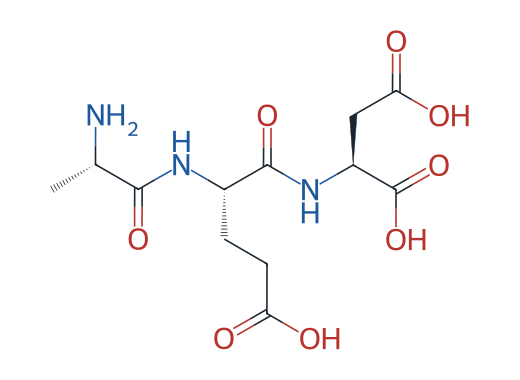
Cartalax is a short synthetic peptide (reported as a tripeptide) from the "peptide bioregulator" research program led by Vladimir Khavinson in St Petersburg, Russia S3. That program proposes that very short peptides act on cartilage and connective tissue, switching particular genes on or off. It is sold online as a tissue-specific "bioregulator" or anti-aging peptide. The research comes almost entirely from this one tradition, and there is no independent human trial.
How it works
The bioregulator hypothesis is that very short peptides enter cells and bind DNA or chromatin proteins directly, switching tissue-specific genes on or off — each peptide acting on the tissue it was derived from S3. For cartalax the supporting work is cell culture only: in tissue cultures from young and old animals it was reported to change how kidney and connective-tissue cells renew themselves, with the effect differing by the age of the donor animal S1, and in a separate laboratory study short peptides of this family were reported to influence how stem cells differentiate toward neuronal lines S2. No receptor has been identified, no whole-animal cartilage outcome has been published, and no human trial exists, so any effect in a person is inferred from those dish experiments. As with the other bioregulators, a tripeptide taken by mouth would be expected to be digested like any small peptide.
Legal status
- FDA: Not approved for any use in the US; there is no approved application in Drugs@FDA S4.
- Compounding: Not on FDA's 503A or 503B bulks lists; no pathway allows a US pharmacy to compound it.
- DEA: Not a controlled substance.
- "Research use only" products: see our explainer.
- WADA: Not named; the S0 catch-all covers substances with no health-authority approval S5.
What the research actually shows
Evidence: D. The 'peptide bioregulator' program led by Vladimir Khavinson in Russia holds that very short peptides can switch specific genes on or off in particular tissues. Almost all of the published work comes from that group and a small circle of collaborators, is in cells or animals, and has not been independently replicated in rigorous Western trials S3. For cartalax specifically, here is what exists.
| Study | Design | Model | Result |
|---|---|---|---|
| Chalisova et al 2015 | Lab study | Kidney tissue cultures | Reported effects on cell renewal in young and old animal tissue S1 |
| Caputi et al 2019 | Lab study | Stem cells | Reported effects on neuronal differentiation of stem cells S2 |
What we don't know: whether cartalax does anything measurable in a person, whether it is safe, the right dose, and whether the single-group findings replicate independently S3.
Reported benefits
- In the lab or in animals: the effects reported in the studies above, within one research tradition S3.
- In people: no outcome trial; the tissue-specific and anti-aging claims marketed for it are untested.
Side effects
Common: not characterized in people; no human studies exist. Serious: none documented, because there is no human safety data.
Dangers and red flags
- Single-source or absent evidence. The case for cartalax rests on one research tradition; independent replication is scarce S3.
- No human data. Any use in people is untested.
- Product quality. Grey-market vials are not checked for identity, purity, sterility or dose.
- Who should avoid it: everyone, in the sense that there is no evidence base; certainly anyone pregnant or breastfeeding.
- Sport: likely banned under WADA S0 S5.
Doses reported
We don't recommend sh*t. These are the doses studies, labels and harm-reduction sources report. That's information, not advice. Talk to a licensed clinician.
No human dosing data found in a source we could check. There is no FDA label and no human trial. The published doses are cell and animal doses, which do not convert to human doses by simple scaling; see dosing myths. We do not fill the gap with vendor or forum figures.
Open the dose math calculator →
Monitoring a doctor would order
No guideline exists. We found no source naming cartalax-specific monitoring.
Bottom line
Cartalax is a short "bioregulator" peptide from the Khavinson program, marketed for cartilage and connective tissue and anti-aging. The supporting work is cell and animal studies from one research tradition, not independently confirmed, and there is no human trial, dose or safety record.
Sources
- [S1] Chalisova NI, et al. Peptide Regulation of Cells Renewal Processes in Kidney Tissue Cultures from Young and Old Animals. Bull Exp Biol Med. 2015;159(1):124-7. PMID 26033601. (in-vitro)
- [S2] Caputi S, et al. Effect of short peptides on neuronal differentiation of stem cells. Int J Immunopathol Pharmacol. 2019;33:2058738419828613. PMID 30791821. (in-vitro)
- [S3] Khavinson VKh. Peptides and Ageing. Neuro Endocrinol Lett. 2002;23 Suppl 3:11-144. PMID 12374906. (review)
- [S4] FDA. Drugs@FDA database (no approved application). Searched product name. (regulator)
- [S5] World Anti-Doping Agency. 2026 Prohibited List, section S0 (Non-approved substances). (regulator)