
Anabolic-androgenic steroids (AAS)
DHEA (prasterone)
Also called dehydroepiandrosterone, prasterone, Intrarosa (vaginal prasterone, Rx), DHEA supplement, DHEA
- US status
- Not approved as a drug
- DEA
- Not a controlled substance
- WADA
- S1.1 Anabolic androgenic steroids; prasterone (DHEA) named as a prohormone; prohibited at all times
- Class
- Anabolic-androgenic steroids (AAS)
Jump to doses reported ↓ Dose math calculator
What it is
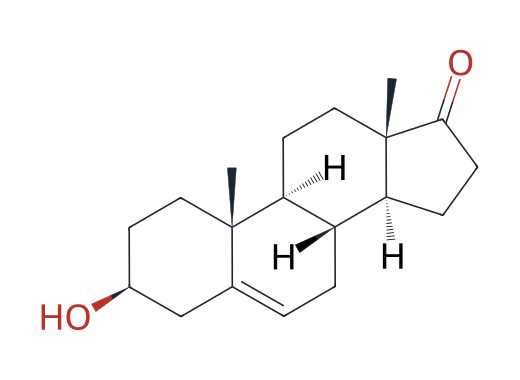
DHEA (dehydroepiandrosterone), also called prasterone, is a hormone the adrenal glands make. The body can convert it into androgens (like testosterone) and estrogens. Blood DHEA peaks in young adulthood and falls steadily with age, which is why it is marketed as an "anti-aging," bodybuilding or hormone-"optimization" supplement. In the US it is sold over the counter as a dietary supplement (oral capsules), and separately there is one FDA-approved prescription form, Intrarosa, a vaginal insert for painful sex after menopause S1. It is on this reference, and classed here as an AAS for the dose tool, because it is an androgen precursor (a prohormone) banned in sport.
How it works
DHEA is a precursor (prohormone): on its own it is relatively inactive, but cells convert it into active androgens and/or estrogens — a process called intracrinology S1. Taking oral DHEA raises blood DHEA and its sulfate and can modestly raise downstream androgens, more so in women (whose baseline androgens are lower) than in men S3. Intrarosa works locally: the vaginal insert delivers prasterone that nearby cells turn into small amounts of androgen and estrogen to restore the vaginal lining, while blood levels of testosterone and estradiol stay within normal postmenopausal range S1S4. The mechanism for vulvar/vaginal atrophy "is not fully established," per the label S1.
Legal status
- FDA: Oral DHEA is a dietary supplement, not an approved drug; no anti-aging, muscle or "optimization" use is FDA-approved. The only approved prasterone drug is Intrarosa, a vaginal insert for moderate-to-severe dyspareunia from menopausal vulvar and vaginal atrophy S1.
- DEA: Not a controlled substance. Federal law specifically excludes dehydroepiandrosterone from the definition of "anabolic steroid," so DHEA is not scheduled even though chemically related androgens are S9.
- Supplement quality: because it is sold as a supplement, the FDA does not check content before sale; an older analysis found many DHEA products did not contain the labeled amount S7.
- WADA: Named and prohibited at all times under S1.1 as a prohormone (prasterone/DHEA) S8.
- International (short): Not reviewed for this page yet.
What the research actually shows
Evidence: B. DHEA has a lot of randomized human data, but the results are mostly negative for the popular anti-aging and muscle claims; the clearest positive signals are narrow (adrenal insufficiency, local vaginal use).
| Study | Design | People | Dose studied | Result |
|---|---|---|---|---|
| Nair 2006 S2 | 2-year double-blind RCT (NCT00254371) | 87 elderly men, 57 elderly women with low DHEA-S | Oral DHEA 75 mg (men) / 50 mg (women); testosterone arm in men | No meaningful effect on body composition, physical performance, insulin sensitivity or quality of life; no major adverse effects |
| Arlt 1999 S3 | Double-blind crossover RCT | 24 women with adrenal insufficiency | Oral DHEA 50 mg/day, 4 months | Restored low androgens to normal; improved well-being, depression and anxiety scores and some measures of sexuality |
| Labrie 2016 S4 | Phase 3 randomized, placebo-controlled | 482 postmenopausal women | Intravaginal prasterone 6.5 mg nightly, 12 weeks | Improved vaginal cell measures, pH and pain with sex vs placebo; main side effect vaginal discharge; blood steroids stayed in normal postmenopausal range |
| Scheffers 2015 (Cochrane) S5 | Systematic review / meta-analysis | 1,273 peri-/postmenopausal women (28 trials) | Various DHEA doses/routes | No improvement in quality of life; more androgenic side effects (mainly acne); possible slight improvement in sexual function; uncertain effect on menopausal symptoms |
| Brown 1999 S6 | Randomized, placebo-controlled | 19 young men in a resistance-training program | Oral DHEA 150 mg/day | Raised androstenedione but not testosterone; no extra gain in strength or lean mass vs placebo |
What we don't know, honestly: DHEA does not have good evidence for the muscle, anti-aging or "hormone optimization" uses it is sold for; the well-supported uses are narrow and supervised. Long-term safety of chronic high-dose oral use is not established.
Reported benefits
- Adrenal insufficiency (women): improved well-being, mood and sexuality when low DHEA is replaced S3.
- Vaginal atrophy (Intrarosa): less painful sex and better vaginal tissue measures with the local insert S1S4.
- Possible small sexual-function benefit in menopausal women, with uncertain significance S5.
- Muscle / anti-aging / athletic performance: not supported — controlled trials in older adults and young men found no meaningful benefit S2S6.
Side effects
Common (from the androgenic conversion): acne and oily skin, and in women facial hair, mild voice changes and other androgenic effects; the Cochrane review tied DHEA to androgenic side effects, mainly acne S5. Oral DHEA can also lower HDL cholesterol and SHBG S3. Intrarosa (local use): the most common side effect is vaginal discharge; an abnormal Pap smear was seen in a year-long study S1. Theoretical / hormone-sensitive concern: because DHEA converts to estrogen and androgen, it is a concern in hormone-sensitive cancers; estrogen is a metabolite, and exogenous estrogen is contraindicated in women with known or suspected breast cancer S1.
Dangers and red flags
- Sold as a supplement, so unverified. Content is not checked by the FDA before sale, and products have historically been mislabeled for actual DHEA content S7.
- It is still a hormone. DHEA converts to androgens and estrogens, so it can cause androgenic effects (acne, hair changes, voice change in women) and raises concern in hormone-sensitive conditions S1S5.
- Unproven for its main selling points. Muscle, anti-aging and "optimization" claims are not backed by the trials S2S6.
- Hormone-sensitive cancer. Caution in anyone with a history of breast or other hormone-sensitive cancer; the Intrarosa label notes estrogen is a prasterone metabolite S1.
- Banned in sport. Named and prohibited at all times S8.
- Undiagnosed bleeding (Intrarosa): any postmenopausal genital bleeding must be evaluated before use S1.
Doses reported
We don't recommend sh*t. These are the doses studies, labels and harm-reduction sources report. That's information, not advice. Talk to a licensed clinician.
The rows below are the FDA label dose for the approved vaginal insert and the doses used in published trials. DHEA is taken as an oral capsule or a vaginal insert, so the reconstitution calculator does not apply, and this page shows no prefilled dose for the dose tool. Over-the-counter supplement doses vary widely and are not standardized or quality-controlled.
| Source | Dose | Unit / route | Frequency | Timing | Duration | Titration / escalation | Context |
|---|---|---|---|---|---|---|---|
| S1 Intrarosa label | 6.5 mg prasterone | mg, vaginal insert | Once daily | At bedtime | Ongoing | Fixed dose | Painful sex from menopausal vaginal atrophy (approved use) |
| S3 Arlt 1999 | 50 mg | mg, oral | Once daily | Morning | 4 months | Fixed | Adrenal insufficiency, women (trial) |
| S2 Nair 2006 | 75 mg (men) / 50 mg (women) | mg, oral | Once daily | — | 2 years | Fixed | Elderly adults; no benefit found |
| S6 Brown 1999 | 150 mg | mg, oral | Once daily | — | 8 weeks | Fixed | Young men + resistance training; no benefit found |
No citable medical dosing for anti-aging, bodybuilding or "optimization" use of DHEA was found; we will not fill that gap with forum or vendor numbers.
Open the dose math calculator →
Monitoring a doctor would order
There is no standard monitoring for over-the-counter DHEA, which is part of the problem. If used under supervision, a clinician would typically check DHEA-S and downstream androgens/estrogens, watch for androgenic effects (acne, hair, voice in women), check a lipid panel (HDL can fall), and be cautious in anyone with hormone-sensitive cancer S1S3S5. For Intrarosa, any postmenopausal genital bleeding is evaluated before and during treatment S1.
Bottom line
DHEA (prasterone) is an adrenal hormone and androgen precursor sold over the counter as a supplement, with one narrow FDA-approved prescription form — the Intrarosa vaginal insert for painful sex after menopause. The popular muscle, anti-aging and "optimization" claims are not supported by controlled trials; the real evidence is limited to adrenal insufficiency and local vaginal use. It is still a hormone with androgenic effects and quality-control problems, it is federally excluded from the controlled-substance definition, and it is named and banned in sport at all times. This site classes it as an AAS for the dose tool and shows no prefilled dose.
Sources
- [S1] INTRAROSA (prasterone) vaginal insert. US prescribing information (DailyMed), Millicent US; label revised 2026. Indication, dosing (one 6.5 mg insert nightly), mechanism, warnings. Set ID ada639d4-bac0-2ad0-e053-2a95a90afce7. (label)
- [S2] Nair KS, et al. DHEA in elderly women and DHEA or testosterone in elderly men. N Engl J Med. 2006;355:1647-59. PMID 17050889. (rct)
- [S3] Arlt W, et al. Dehydroepiandrosterone replacement in women with adrenal insufficiency. N Engl J Med. 1999;341:1013-20. PMID 10502590. (rct)
- [S4] Labrie F, et al. Efficacy of intravaginal dehydroepiandrosterone (DHEA) on moderate to severe dyspareunia and vaginal dryness, symptoms of vulvovaginal atrophy, and of the genitourinary syndrome of menopause. Menopause. 2016;23:243-56. PMID 26731686. (rct)
- [S5] Scheffers CS, et al. Dehydroepiandrosterone for women in the peri- or postmenopausal phase. Cochrane Database Syst Rev. 2015;(1):CD011066. PMID 25879093. (review)
- [S6] Brown GA, et al. Effect of oral DHEA on serum testosterone and adaptations to resistance training in young men. J Appl Physiol (1985). 1999;87:2274-83. PMID 10601178. (rct)
- [S7] Parasrampuria J, et al. Quality control of dehydroepiandrosterone dietary supplement products. JAMA. 1998;280:1565. PMID 9820251. (human-observational)
- [S8] World Anti-Doping Agency. 2026 Prohibited List, section S1.1 (anabolic androgenic steroids; prasterone/DHEA named as a prohormone). (regulator)
- [S9] 21 CFR 1300.01 — definition of 'anabolic steroid' excludes dehydroepiandrosterone (eCFR). (regulator)