
Brain, sleep & 'longevity' research peptides
Epitalon
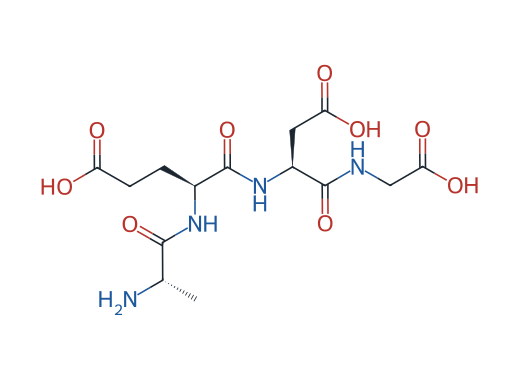
Also called Epithalon, Epithalone, AEDG, Ala-Glu-Asp-Gly, epitalon acetate
- US status
- Not approved
- DEA
- Not a controlled substance
- WADA
- Not named; falls under the S0 catch-all if no health authority has approved it
- Class
- Brain, sleep & 'longevity' research peptides
Jump to doses reported ↓ Dose math calculator
What it is
Epitalon is a four-amino-acid peptide (Ala-Glu-Asp-Gly) made in the lab, modeled on the amino-acid makeup of epithalamin, an extract of cow pineal gland S6S7. It is marketed as an anti-aging or "telomere" peptide. Older research on epithalamin, the extract, is a different product and should not be read as evidence for the synthetic peptide S6.
How it works
The proposed mechanism is telomerase activation. Telomeres are the protective caps on chromosome ends that shorten each time a cell divides; telomerase is the enzyme that rebuilds them. In cultured human cells, epitalon switched telomerase on and telomeres lengthened S8S9. A 2025 cell study found the lengthening happened through telomerase in normal cells but through a different route (alternative lengthening of telomeres) in two breast cancer cell lines S9. Because the parent material is a pineal extract, it has also been proposed to act on pineal and neuroendocrine signalling, including melatonin rhythm S6S7.
All of that is inferred from cell-culture and animal work — there is no human study showing it does any of these things in a person, and no adequately powered randomized trial has established an effect at all S6. The mechanism also carries its own warning: switching on telomerase, or any telomere-lengthening route, is the same thing cancer cells do to become immortal, and the cancer-cell finding above is why that question is open rather than reassuring S6S9.
Legal status
- FDA: Not approved for any use in the US.
- Compounding: FDA had placed epitalon in Category 2, citing possible immune reactions for some routes and stating it "has not identified safety-related information regarding epitalon for the proposed route of administration" S1. The nomination was withdrawn; it sits on FDA's withdrawn list S1. FDA's compounding advisory committee reviewed it for insomnia on Jul 24 2026 S4; per HHS, the committee voted in favor while FDA's drug center recommended against S3.
- HHS draft policy (Oct 30 2026): HHS does not intend to take enforcement action against state-licensed pharmacies or physicians compounding epitalon acetate as a subcutaneous or intramuscular injection "dispensed in intermittent courses", from ingredient lots with a full certificate of analysis, with a patient-specific prescription and adverse-event reporting S2S3. HHS's reasoning: FDA's safety concerns were "mechanistic rather than based on observed harm," and "the limited controlled human exposure reported no side effects" S3. A draft enforcement stance is not approval S2.
- DEA: Not a controlled substance.
- "Research use only" products: see our explainer.
- WADA: Not named on the 2026 List. S0 covers any pharmacological substance with no current approval by any government health authority S5.
What the research actually shows
Evidence: D. A 2026 review that searched the literature through September 2026 concluded that human evidence "is limited to small physiological or biomarker studies and an older controlled study in retinitis pigmentosa," that "no adequately powered randomized trial has established therapeutic efficacy," and that dose-ranging and long-term safety data "remain inadequate" S6. The rest is cell and animal work.
| Study | Design | Model | Dose studied | Result |
|---|---|---|---|---|
| Khavinson et al 2003 S8 | Lab study | Human fetal fibroblasts (telomerase-negative) | Not stated in the abstract | Telomerase switched on; telomeres lengthened |
| Al-Dulaimi et al 2025 S9 | Lab study | Normal human epithelial cells and fibroblasts; two breast cancer cell lines | Several concentrations | Telomeres lengthened in normal cells via telomerase; in cancer cells, telomeres lengthened via a different route (ALT) |
| Anisimov et al 2002 S10 | Animal study | Female HER-2/neu transgenic mice (prone to breast tumors) | 1 µg per mouse SC, 5 consecutive days every month | Fewer and smaller breast tumors than saline |
| Jain et al 2026 S6 | Narrative review | — | — | Biologically active, clinically unproven |
What we don't know: whether it changes any health outcome or lifespan in people, the right dose, how long it lasts in the body, and whether lengthening telomeres is safe in someone with an undiagnosed cancer S6S9.
Reported benefits
- In cells: telomerase activation and longer telomeres S8S9.
- In tumor-prone mice: fewer breast tumors S10.
- In people: no outcome benefit shown in an adequately powered trial S6.
Side effects
Common: not characterized in people. HHS reports "the limited controlled human exposure reported no side effects" S3; small studies cannot detect uncommon harms. Serious: none documented in the sources we found. FDA said it lacks enough information to know whether it would cause harm S1.
Dangers and red flags
- The cancer question. Cancer cells rely on keeping their telomeres long. In one lab study epitalon lengthened telomeres in breast cancer cells too, through a different mechanism than in normal cells S9. A mouse study pointed the other way, with fewer tumors S10. The 2026 review lists oncologic risk as unresolved S6.
- Extract vs peptide. Much of the "decades of research" cited online is about epithalamin, a different product S6.
- Product quality. HHS listed missing endotoxin, microbial and solvent testing as gaps FDA had found S3; grey-market vials carry no such documentation.
- Who should avoid it: people with a history of cancer, and anyone pregnant or breastfeeding, given the open questions above and no human safety data.
Doses reported
We don't recommend sh*t. These are the doses studies, labels and harm-reduction sources report. That's information, not advice. Talk to a licensed clinician.
No human dosing data found in a source we could check. There is no FDA label. The 2026 review says dose-ranging data are inadequate S6. HHS says documented compounding regimens are "intermittent rather than continuous" but publishes no dose S3. We found no peer-reviewed survey of community use. We do not fill the gap with vendor or forum figures.
For context only, the one animal schedule we checked:
| Source | Population | Dose | Route | Frequency and timing | Duration | Titration or escalation | Cite |
|---|---|---|---|---|---|---|---|
| Anisimov et al 2002 (animal, not a human dose) | Female HER-2/neu transgenic mice, from 2 months of age | 1 µg per mouse | Subcutaneous | Once daily for 5 consecutive days each month | Monthly courses over the study | None | S10 |
Mouse doses do not convert to human doses by simple scaling; see dosing myths.
Open the dose math calculator →
Monitoring a doctor would order
No guideline exists. We found no source naming epitalon-specific monitoring.
Bottom line
Epitalon switches on telomerase in a dish and cut breast tumors in one mouse strain. In people there is no adequately powered trial, no established dose, and an unresolved question about what telomere lengthening does in cancer cells. HHS's draft policy would let pharmacies compound it in intermittent injection courses; that is about manufacturing quality, not proof of benefit.
Sources
- [S1] FDA. Certain Bulk Drug Substances for Use in Compounding that May Present Significant Safety Risks (Epitalon entry, 'Bulk drug substances nominated but withdrawn'). Content current as of 04/22/2026. (regulator)
- [S2] HHS. Enforcement Discretion Policy Regarding 503A Compounding Using Certain Peptide Bulk Drug Substances (notice of availability, draft policy). Federal Register FR Doc 2026-22192, Oct 30 2026. (regulator)
- [S3] HHS. Enforcement Discretion Policy Regarding 503A Compounding Using Certain Peptide Bulk Drug Substances, Appendix A and Appendix B (epitalon identity, routes and justification). Policy PDF linked from FR Doc 2026-22192. (regulator)
- [S4] FDA. July 23-24, 2026: Meeting of the Pharmacy Compounding Advisory Committee (Jul 24 agenda: epitalon reviewed for insomnia). (regulator)
- [S5] World Anti-Doping Agency. 2026 Prohibited List, section S0 (Non-approved substances). (regulator)
- [S6] Jain A, et al. Epitalon and Epithalamin: A Narrative Review of Mechanistic, Preclinical, and Clinical Evidence. Int J Mol Sci. 2026;27(19):8922. PMID 42884164. (review)
- [S7] Araj SK, et al. Overview of Epitalon-Highly Bioactive Pineal Tetrapeptide with Promising Properties. Int J Mol Sci. 2025;26(6):2691. PMID 40141333. (review)
- [S8] Khavinson VKh, et al. Epithalon peptide induces telomerase activity and telomere elongation in human somatic cells. Bull Exp Biol Med. 2003;135(6):590-2. PMID 12937682. (in-vitro)
- [S9] Al-Dulaimi S, et al. Epitalon increases telomere length in human cell lines through telomerase upregulation or ALT activity. Biogerontology. 2025;26(5):178. PMID 40908429. (in-vitro)
- [S10] Anisimov VN, et al. Inhibitory effect of the peptide epitalon on the development of spontaneous mammary tumors in HER-2/neu transgenic mice. Int J Cancer. 2002;101(1):7-10. PMID 12209581. (animal)