
Wellness injectables (non-peptide)
L-carnitine (injection)
Also called levocarnitine, Carnitor, L-carnitine injection
- US status
- Approved
- DEA
- Not a controlled substance
- WADA
- Not prohibited as a substance; but IV infusions above the WADA volume limit are a prohibited method (M2)
- Class
- Wellness injectables (non-peptide)
Jump to doses reported ↓ Dose math calculator
What it is
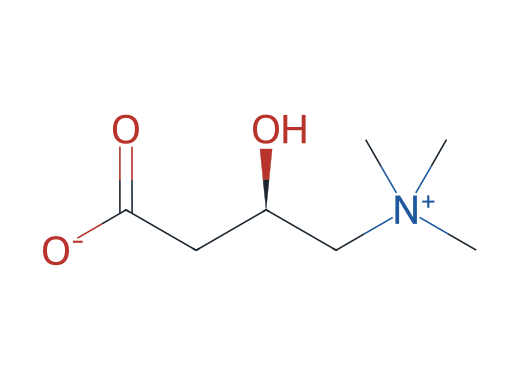
L-carnitine (levocarnitine) is a natural compound involved in how cells use fat for fuel. As an approved prescription drug it treats genuine carnitine deficiency, including in people on dialysis. It is sold and administered widely in "wellness" and fat-loss settings as an injection, but that use is off-label and not backed by strong evidence S1.
How it works
Carnitine's core job is to ferry long-chain fatty acids across the inner mitochondrial membrane so they can be burned for energy; without enough of it, those fats cannot be oxidized S1. That is why replacing it corrects a true carnitine deficiency S1. The fat-loss pitch extends this logic — more carnitine, more fat burned — but in people who are not deficient, carnitine stores are already adequate and extra does not force more fat oxidation, which is why the weight-loss use is not supported S1.
Legal status
- FDA: Approved as levocarnitine for primary carnitine deficiency and for carnitine deficiency in end-stage kidney disease on dialysis S1. Weight-loss and performance use is not an approved indication.
- Compounding: levocarnitine is an approved drug substance; "wellness" injectables may be compounded, and quality varies.
- DEA: Not a controlled substance.
- "Research use only" labels: not relevant for the approved drug.
- WADA (sport): L-carnitine itself is not a prohibited substance, but giving it by IV infusion above the WADA volume limit is a prohibited method (M2) S2. This has been a real issue for athletes.
- International (short): Not reviewed for this page yet.
What the research actually shows
Evidence: B for treating carnitine deficiency; weak and inconsistent for fat loss or performance in people who are not deficient.
| Study | Design | People | Dose studied | Result |
|---|---|---|---|---|
| Label S1 | Approved indications | Primary or dialysis-related carnitine deficiency | Oral or IV levocarnitine | Corrects deficiency and its symptoms |
What we don't know for this page: we did not find strong controlled-trial evidence that L-carnitine injections cause meaningful fat loss or performance gains in healthy, non-deficient people; we will not fill that gap with marketing claims.
Reported benefits
Clear benefit in genuine carnitine deficiency (energy metabolism, muscle symptoms) S1. Claims of fat loss, "energy," or athletic enhancement in non-deficient people are not well supported by evidence.
Side effects
Common: nausea, vomiting, stomach cramps, diarrhea, and a fishy body odor at higher doses S1. Serious: the label notes seizures in some patients and caution in people with kidney impairment; the D-isomer (not the L-form) can be harmful, so only L-carnitine/levocarnitine should be used S1.
Dangers and red flags
- Off-label "wellness" injections. Quality, sterility and dose of compounded or grey-market products are not assured.
- Kidney impairment. Needs dose attention S1.
- Sport: high-volume IV infusions are a prohibited method S2.
Doses reported
We don't recommend sh*t. These are the doses studies, labels and harm-reduction sources report. That's information, not advice. Talk to a licensed clinician.
L-carnitine injection is a ready-to-use solution, so the reconstitution calculator does not apply. The numbers below are the approved uses; doses used in "wellness" settings are off-label and not standardized.
| Source | Dose | Unit / route | Frequency | Timing | Duration | Titration / escalation | Context |
|---|---|---|---|---|---|---|---|
| S1 Label (dialysis) | ~10-20 mg/kg | mg/kg, IV | After each dialysis session | In the dialysis unit | Ongoing | Adjusted by carnitine levels/response | Carnitine deficiency in ESRD |
| S1 Label (oral) | 1-3 g/day | g, oral (divided) | Daily | With meals | Ongoing | Titrated to tolerance | Primary carnitine deficiency |
Monitoring a doctor would order
Carnitine levels where relevant, kidney function, and GI tolerance S1.
Bottom line
L-carnitine (levocarnitine) is an approved drug for real carnitine deficiency, including in dialysis patients. Its popular use as a fat-loss or performance injection is off-label and not supported by strong evidence, and high-volume IV infusions are banned in sport. Only the L-form should ever be used. The approved product is a prescription medicine.