
Anabolic-androgenic steroids (AAS)
Mesterolone
Also called Proviron, Proviron, 1α-methyl-dihydrotestosterone, mestanolone-related
- US status
- Not approved for human use in the US
- DEA
- Schedule III (21 CFR 1308.13(f))
- WADA
- S1.1 Anabolic androgenic steroids; prohibited at all times
- Class
- Anabolic-androgenic steroids (AAS)
Jump to doses reported ↓ Dose math calculator
What it is
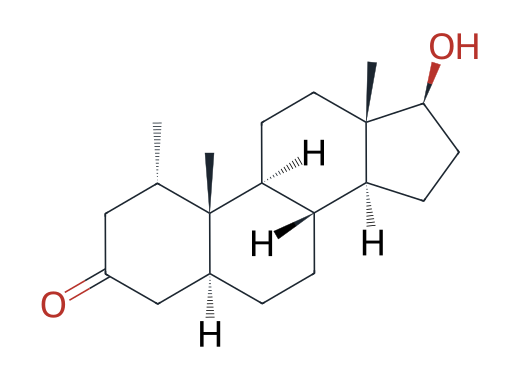
Mesterolone is an oral anabolic-androgenic steroid, a 1α-methyl derivative of dihydrotestosterone, sold in some countries as Proviron. Abroad it has been used for symptoms of androgen deficiency and has historically been tried (without success) for male infertility S1. It has never been approved in the US. Non-medically it is used as an oral androgen, often to counter low libido while using other steroids.
How it works
Mesterolone is a synthetic androgen built on the dihydrotestosterone (DHT) skeleton. Like other androgens, it works by binding the androgen receptor; the activated receptor acts as a transcription factor that switches on the genes driving nitrogen retention, muscle protein synthesis, and male secondary sex characteristics S5. Because it is already a 5α-reduced (DHT-type) molecule, it is not a substrate for aromatase and does not convert to estrogen — which is why it produces androgenic effects without the fluid retention or gynecomastia seen with aromatizable steroids. In clinical terms it is described as weakly anabolic but comparatively androgenic, meaning its receptor activity favors androgenic (masculinizing) effects over tissue building. Unlike most oral steroids it is not 17α-alkylated — its oral activity comes from the 1α-methyl group — so it lacks the direct hepatic toxicity characteristic of 17α-alkylated orals, though it remains an androgen. Its reputation for supporting libido is attributed to this direct androgenic activity. Like all androgens it feeds back on the hypothalamic-pituitary-testicular axis, suppressing LH and FSH and therefore the body's own testosterone production S5. Because there are no modern controlled human trials, much of its mechanism is inferred from its DHT-like structure and from androgen pharmacology generally rather than from efficacy data in people S1.
Legal status
- FDA: No mesterolone product is approved in the US. It is marketed in some other countries for androgen deficiency S1.
- DEA: Schedule III anabolic steroid, listed by name in 21 CFR 1308.13(f) S2. Possessing it without a valid prescription is a federal crime S3.
- Grey market: underground "Proviron" is an unapproved, unregulated product of unknown identity and dose.
- WADA: Prohibited at all times under S1.1 S4.
- International (short): Not reviewed for this page yet.
What the research actually shows
Evidence: C. The best human evidence is a Cochrane review of androgens (including mesterolone) for idiopathic male infertility, which found they do not improve fertility despite being used for that purpose; the review has since been withdrawn as out of date S1. There are no controlled trials supporting mesterolone for muscle or performance.
| Study | Design | People | Dose studied | Result |
|---|---|---|---|---|
| Vandekerckhove 2007 S1 | Systematic review (androgens incl. mesterolone) | Men with idiopathic oligo/asthenospermia | Oral androgen therapy | No evidence that androgens improve fertility; review later withdrawn as outdated |
What we don't know: mesterolone has little modern controlled study of any kind; its non-medical effects are not tested, and grey-market identity is unverified.
Reported benefits
In medical use abroad: treatment of some androgen-deficiency symptoms S1. Users report improved libido and a sense of "hardness," and use it to offset the sexual side effects of other steroids — user-reported, not tested. It did not improve fertility in the pooled trials S1.
Side effects
Mesterolone is not 17α-alkylated, so it is less liver-stressing than many oral steroids, but it is still an androgen S5: Common: suppression of the body's own testosterone, acne, oily skin, and male-pattern hair loss (DHT-derivative). Serious: virilization in women that can be permanent; unfavorable cholesterol changes and the cardiovascular strain seen across AAS S5S6.
Dangers and red flags
- Controlled substance. Non-prescription possession is a federal crime S3.
- No proven fertility benefit. Despite its reputation, androgens including mesterolone did not improve male fertility in pooled trials S1.
- Hormonal suppression and virilization. Natural testosterone is suppressed; women face irreversible masculinizing effects S5.
- Cardiovascular (class). AAS use is linked to higher rates of heart disease S6.
- Grey-market quality. Unverified identity and dose; about half of AAS samples in cohort data did not match their label S7.
- Sport: prohibited at all times S4.
- Who should avoid it: women (virilization), anyone with prostate concerns or heart disease, and anyone without a genuine medical need and prescription.
Doses reported
We don't recommend sh*t. These are the doses studies, labels and harm-reduction sources report. That's information, not advice. Talk to a licensed clinician.
There is no US label. The row below reflects the medical context studied; a standardized dose we can cite is not given in the pooled infertility review. Mesterolone is a tablet, so the reconstitution calculator does not apply. We do not list illicit physique doses, which have no citable medical source.
| Source | Dose | Unit / route | Frequency | Timing | Duration | Titration / escalation | Context |
|---|---|---|---|---|---|---|---|
| S1 Vandekerckhove 2007 | Oral androgen therapy (mesterolone among agents; dose not standardized across trials) | oral | Per trial | — | — | — | Idiopathic male infertility (no benefit found) |
Open the dose math calculator →
Monitoring a doctor would order
No US monitoring standard exists. For any androgen, a clinician would check testosterone, a lipid panel, blood pressure, and (in men) prostate health, plus signs of virilization in women S5. Tell the clinician what was actually used.
Bottom line
Mesterolone ("Proviron") is an oral DHT-derived androgen marketed abroad but never approved in the US. Its best human evidence shows it does not improve male fertility, and there are no trials supporting it for muscle or performance. It is milder on the liver than 17α-alkylated orals but still suppresses hormones, can virilize women, and carries AAS cardiovascular risk. It is a Schedule III controlled substance whose non-prescription possession is a federal crime, and it is banned in sport at all times.
Sources
- [S1] Vandekerckhove P, et al. WITHDRAWN: Androgens versus placebo or no treatment for idiopathic oligo/asthenospermia. Cochrane Database Syst Rev. 2007;(4):CD000150. PMID 17636603. (review)
- [S2] 21 CFR 1308.13(f), Schedule III anabolic steroids; mesterolone (1α-methyl-17β-hydroxy-5α-androstan-3-one) (eCFR). (regulator)
- [S3] 21 U.S.C. 844, Penalties for simple possession. (regulator)
- [S4] World Anti-Doping Agency. 2026 Prohibited List, section S1.1 (anabolic androgenic steroids). (regulator)
- [S5] Pope HG Jr, et al. Adverse health consequences of performance-enhancing drugs: an Endocrine Society scientific statement. Endocr Rev. 2014;35:341-75. PMID 24423981. (review)
- [S6] Windfeld-Mathiasen J, et al. Cardiovascular Disease in Anabolic Androgenic Steroid Users. Circulation. 2025;151:828-834. PMID 39945117. (human-observational)
- [S7] Smit DL, et al. Baseline characteristics of the HAARLEM study: 100 male amateur athletes using anabolic androgenic steroids. Scand J Med Sci Sports. 2020;30:531-539. PMID 31663164. (human-observational)