
Anabolic-androgenic steroids (AAS)
Methandrostenolone (metandienone)
Also called Dianabol, dbol, metandienone, methandienone, oral anabolic steroid
- US status
- Discontinued (no current US product)
- DEA
- Schedule III (21 CFR 1308.13(f))
- WADA
- S1.1 Anabolic androgenic steroids; prohibited at all times
- Class
- Anabolic-androgenic steroids (AAS)
Jump to doses reported ↓ Dose math calculator
What it is
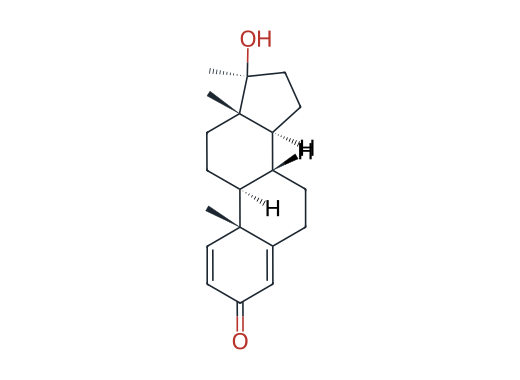
Methandrostenolone, better known by the old brand Dianabol or as "dbol," is an oral anabolic-androgenic steroid and one of the earliest to be used in sport. No methandrostenolone product is approved or marketed in the US today; it survives entirely through the grey market.
How it works
Methandrostenolone is a synthetic derivative of testosterone, modified at the 17-alpha position and in the A-ring. Like other androgens, it works by binding the androgen receptor; the activated receptor acts as a transcription factor that turns on the genes driving nitrogen retention and muscle protein synthesis, which is the anabolic (nitrogen-retaining) action described in the older metabolic work S2. It is 17-alpha-alkylated, the structural change that lets the molecule survive first-pass liver metabolism and be taken as a tablet — the same modification that makes 17-alpha-alkylated orals characteristically hard on the liver. Unlike the pure DHT-derived steroids, methandrostenolone is aromatizable: it can be converted by aromatase to an estrogenic metabolite, which accounts for its tendency to cause fluid retention and gynecomastia. Downstream, these actions produce the rapid weight gain — part of it water — and the rise in blood pressure recorded in the early athlete trial S1. Like all androgens it feeds back on the hypothalamic-pituitary-testicular axis, suppressing LH and the body's own testosterone. Its reputation for fast strength and size rests on these old, small studies, so its effects are inferred from that limited human record and from androgen pharmacology generally rather than from modern controlled data S1S2.
Legal status
- FDA: Discontinued. No approved or marketed methandrostenolone product exists in the US S3.
- DEA: Schedule III controlled substance under 21 CFR 1308.13(f). Non-prescription possession or distribution is a federal crime S3.
- Grey market: underground-lab "dbol" is an unapproved, unregulated product of unverified identity, dose, and purity, and is often counterfeit.
- WADA: Prohibited at all times under S1.1; it was central to early doping scandals S4.
- International (short): Not reviewed for this page yet.
What the research actually shows
Evidence: C. The human data are old and small, from the 1970s–80s, when methandienone was studied in athletes. They show weight gain and side effects, but the trials were small and the quality limited by modern standards.
| Study | Design | People | Dose studied | Result |
|---|---|---|---|---|
| Freed 1975 S1 | Crossover, double-blind | Weightlifters | Methandienone 10 or 25 mg/day oral | Body weight rose (partly water retention), systolic blood pressure rose significantly, and side effects caused some men to withdraw |
| Santidrián 1981 S2 | Older human/metabolic report | Men | Methandrostenolone (dianabol) | Described an anabolic (nitrogen-retaining) action on body composition |
What we don't know, in recreational use: the safety of the much higher doses used illicitly, and whether grey-market tablets contain methandrostenolone at the stated amount.
Reported benefits
In the old studies: rapid weight gain, part of it fluid, with an anabolic effect on body composition S1S2. Users prize its fast strength and size gains, but those come with pronounced side effects even in the historical trials.
Side effects
Common: marked fluid retention, rises in blood pressure, acne, gynecomastia (it aromatizes to estrogen), and suppression of natural testosterone; unfavorable cholesterol changes are typical of oral alkylated steroids. Serious: liver strain is the signature risk of 17-alpha-alkylated orals (enzyme elevations, cholestasis, and rarely liver tumors or peliosis), along with cardiovascular risk from lipid and blood-pressure effects S1.
Dangers and red flags
- Controlled substance. Non-prescription possession is a federal crime S3.
- Liver toxicity. As an oral alkylated steroid, methandrostenolone is notably hepatotoxic.
- Cardiovascular strain. Even the 1975 trial showed a significant rise in systolic blood pressure S1.
- Estrogenic effects. Water retention and gynecomastia are common.
- Grey-market quality. "Dbol" tablets are frequently counterfeit or underdosed/overdosed.
- Sport: prohibited at all times S4.
Doses reported
We don't recommend sh*t. These are the doses studies, labels and harm-reduction sources report. That's information, not advice. Talk to a licensed clinician.
There is no current FDA label (discontinued), so there is no label dose. The only citable human doses are from the old athlete studies below, all oral. We do not list illicit physique doses, which have no citable medical source. Methandrostenolone is a tablet, so the reconstitution calculator does not apply.
| Source | Dose | Unit / route | Frequency | Timing | Duration | Titration / escalation | Context |
|---|---|---|---|---|---|---|---|
| S1 Freed 1975 | 10 or 25 mg | mg, oral | Daily | — | Crossover trial periods | Two fixed dose levels | Weightlifters, double-blind crossover |
No validated survey or harm-reduction source with citable numbers beyond these historical trial doses was found that we could cite; we will not fill that gap with forum or vendor numbers.
Monitoring a doctor would order
There is no current medical use. For any oral alkylated steroid, the relevant checks would be liver enzymes, a lipid panel, blood pressure, and testosterone S1. No methandrostenolone-specific monitoring standard exists today.
Bottom line
Methandrostenolone ("Dianabol") is a discontinued oral anabolic steroid with only old, small human studies that showed weight gain alongside raised blood pressure and side effects. It is a Schedule III controlled substance whose non-prescription possession is a federal crime, it is notably hard on the liver, and grey-market tablets are often counterfeit. It is banned in sport at all times.
Sources
- [S1] Freed DL, et al. Anabolic steroids in athletics: crossover double-blind trial on weightlifters (methandienone). Br Med J. 1975;2:471-473. PMID 125133. (rct)
- [S2] Santidrián S, et al. Anabolic action of dianabol (methandrostenolone) on muscle protein. Horm Metab Res. 1981;13:407-410. PMID 7274996. (human-observational)
- [S3] U.S. Drug Enforcement Administration. Anabolic steroids list, 21 CFR 1308.13(f) (Schedule III). (regulator)
- [S4] World Anti-Doping Agency. 2026 Prohibited List, section S1.1 (anabolic androgenic steroids). (regulator)