
SARMs & adjacent non-peptides
SLU-PP-332
Also called SLU PP 332, pan-ERR agonist, ERR agonist
- US status
- Not approved
- DEA
- Not a federally scheduled controlled substance; it is an unapproved drug and is not a lawful dietary ingredient
- WADA
- S0 Non-approved substances; prohibited at all times
- Class
- SARMs & adjacent non-peptides
Jump to doses reported ↓ Dose math calculator
What it is
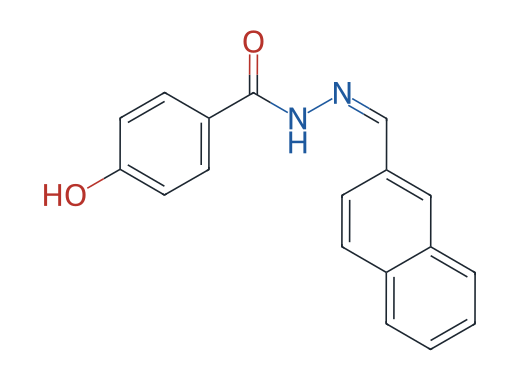
SLU-PP-332 is an academic tool compound that activates all three estrogen-related receptors (ERR-alpha, beta and gamma). Despite the name, these receptors have nothing to do with estrogen: they are master regulators of how many mitochondria a cell builds and how hard those mitochondria work, and they are part of what training turns on in muscle S1S2. Activating them pharmacologically produces, in mice, some of what exercise produces, which is why the research group that made it described it as an exercise mimetic S1S4. It has never been through clinical development and no human has been studied on it. It is sold through the grey market as a vial of powder for injection or as an oral research chemical.
How it works
The estrogen-related receptors (ERRα, ERRβ, ERRγ) are nuclear receptors that share structure with the estrogen receptor but have no natural estrogen ligand and no estrogenic activity. Their job is metabolic: with the coactivator PGC-1α they drive the genes for mitochondrial biogenesis, fatty-acid oxidation and oxidative metabolism — the same programme endurance training switches on in muscle S1S2.
SLU-PP-332 is a synthetic agonist that activates all three, so the programme runs without the exercise. In mice this raised fatty-acid use, increased energy expenditure and improved features of metabolic syndrome S1, improved cardiac fatty-acid metabolism and mitochondrial function in heart failure models S2, and reduced mitochondrial dysfunction and inflammation in the aging kidney S3. A related compound from the same group increased running capacity in mice S4.
No human has been studied on it in a published trial, so all of this is mechanism inferred from animal and cell work. The metabolic consequence that matters for safety is the same one that makes it interesting: it drives a demand for fuel oxidation across heart, liver, kidney and muscle at once, with no human data on what that does over time. Its metabolism and detectability have so far been characterized only for doping-control purposes S5.
Legal status
- FDA: Not approved, and never entered clinical development. There is no investigational programme and no human data S1S4.
- Dietary-supplement status: SLU-PP-332 is an unapproved drug and is not a lawful dietary ingredient; selling it as a supplement is illegal.
- DEA: Not a federally scheduled controlled substance.
- "Research use only" products: this is a genuine laboratory reagent sold on to consumers; a vial's identity, purity and sterility are unverified. See our explainer.
- WADA: Prohibited at all times under S0, the non-approved substances category that captures any pharmacological substance with no current approval for human therapeutic use S6. Anti-doping chemists have already characterized SLU-PP-332 and a successor compound as doping candidates and worked out how to detect them S5.
- International (short): Not reviewed for this page yet.
What the research actually shows
Evidence: D. Mice and cells only. There is no human study of SLU-PP-332 of any kind - no trial, no pharmacokinetics, no safety data. The published work is a small set of papers from the laboratories that invented the compound and related ERR agonists.
| Study | Design | Subject | What it studied | Result |
|---|---|---|---|---|
| Billon 2024 S1 | Animal study | Diet-induced obese mice and ob/ob mice | Whether an ERR agonist acts as an exercise mimetic in metabolic disease | Increased energy expenditure and fat oxidation, reduced fat mass accumulation, reduced obesity and improved insulin sensitivity |
| Xu 2024 S2 | Animal study | Mouse models of heart failure | Pan-ERR agonists and cardiac energy metabolism | Improved cardiac fatty acid metabolism and mitochondrial function, with better heart function in the models |
| Wang 2023 S3 | Animal study | Aging mouse kidney | ERR agonism and mitochondrial dysfunction | Reversed markers of mitochondrial dysfunction and inflammation in aged kidneys |
| Billon 2026 S4 | Animal study of a successor compound (SLU-PP-915) | Mice | Oral activity and aerobic exercise capacity | The newer, orally active analogue increased aerobic exercise capacity; the work itself signals that the original compound's oral activity was a limitation |
| Moeller 2026 S5 | Analytical chemistry, in vitro metabolism | Liver preparations | How to detect SLU-PP-332 and SLU-PP-915 in doping control | Metabolites and detection approach characterized because these compounds are expected to be misused |
What we don't know: whether SLU-PP-332 is absorbed usefully in a person and by which route, what blood levels it reaches, what dose does anything, and what sustained activation of mitochondrial master-regulators does to the heart, liver, kidneys or hormones over months. None of this has been studied in a human. The development of an orally active successor compound indicates the original's drug-like properties were poor S4.
Reported benefits
None are established in people, because no person has been studied. In mice: higher energy expenditure, more fat burned, less fat mass gained, better insulin sensitivity, and in separate models better heart and kidney mitochondrial function S1S2S3. What users report is user-reported, not tested.
Side effects
Common: unknown. No human has been dosed in a published study, so there is no side-effect list to report, favourable or otherwise. Serious: unknown. The mouse papers report their findings as beneficial, but mouse studies of weeks' duration in a disease model are not a safety assessment for a healthy person taking something for months.
Dangers and red flags
- No human evidence whatsoever. Not one published human study of dose, exposure, effect or harm S1S4S5.
- A tool compound, not a medicine. It was made to probe biology, and its own inventors went on to build a different molecule with better drug properties S4.
- The target is not local to muscle. ERRs regulate mitochondrial biology across heart, kidney, liver and brain; mouse work covers heart and kidney as separate research questions S2S3. Long-term consequences of pushing that system pharmacologically are uncharacterized.
- Unknown product contents. Grey-market vials of a compound this new have no identity, purity or sterility standard behind them.
- Sport: prohibited at all times under the non-approved substances category, and detection methods already exist S5S6.
Doses reported
We don't recommend sh*t. These are the doses studies, labels and harm-reduction sources report. That's information, not advice. Talk to a licensed clinician.
There is no human dosing data for SLU-PP-332. No FDA label, no human trial, no published human pharmacokinetics. The only published doses are milligrams per kilogram administered to mice in laboratory experiments; those are not a human dose and cannot be converted into one S1. We will not fill that gap with forum or vendor numbers.
Open the dose math calculator →
Monitoring a doctor would order
No guideline, trial or monitoring standard exists. There is nothing established to monitor, because nothing has been measured in a person S1S4.
Bottom line
SLU-PP-332 is a preclinical academic tool compound that activates estrogen-related receptors and reproduces part of the metabolic effect of exercise in mice. It has never been given to a human in a published study, so there is no dose, no efficacy evidence and no safety data; its inventors have since built a different, orally active molecule, and anti-doping laboratories have already prepared to detect both. It is prohibited in sport at all times as a non-approved substance.
Sources
- [S1] Billon C, Schoepke E, Avdagic A, Chatterjee A, Butler AA, Elgendy B, Walker JK, Burris TP. A Synthetic ERR Agonist Alleviates Metabolic Syndrome. J Pharmacol Exp Ther. 2024;388(2):232-240. PMID 37739806. (animal)
- [S2] Xu W, et al. Novel Pan-ERR Agonists Ameliorate Heart Failure Through Enhancing Cardiac Fatty Acid Metabolism and Mitochondrial Function. Circulation. 2024;149(3):227-250. PMID 37961903. (animal)
- [S3] Wang XX, et al. Estrogen-Related Receptor Agonism Reverses Mitochondrial Dysfunction and Inflammation in the Aging Kidney. Am J Pathol. 2023;193(12):1969-1987. PMID 37717940. (animal)
- [S4] Billon C, et al. An orally active estrogen receptor-related receptor agonist, SLU-PP-915, enhances aerobic exercise capacity. J Pharmacol Exp Ther. 2026;393:103787. PMID 41421047. (animal)
- [S5] Moeller T, et al. In Vitro Metabolism and Analytical Characterization of SLU-PP-332 and SLU-PP-915: Novel Pan-ERR Agonists With Doping Potential. Rapid Commun Mass Spectrom. 2026;40:e70039. PMID 41588687. (in-vitro)
- [S6] World Anti-Doping Agency. 2026 Prohibited List, section S0 (non-approved substances). (regulator)