
Other approved peptide drugs
Trofinetide
Also called Daybue, NNZ-2566, glycine-proline-glutamate analog, IGF-1 tripeptide analog
- US status
- Approved
- DEA
- Not a controlled substance
- WADA
- Not listed as prohibited
- Class
- Other approved peptide drugs
Jump to doses reported ↓ Dose math calculator
What it is
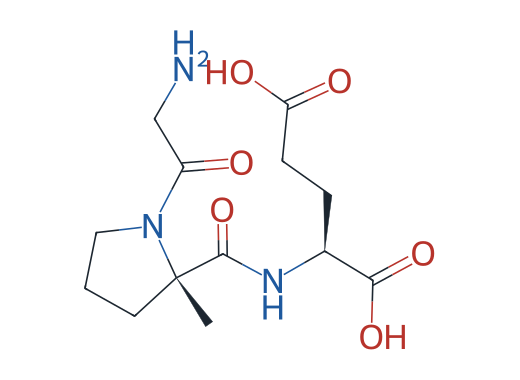
Trofinetide is a synthetic analog of a small peptide (glycine-proline-glutamate) derived from IGF-1, thought to reduce brain inflammation and support synapse function. It is an approved prescription drug (Daybue) and the first treatment for Rett syndrome, a rare genetic neurodevelopmental disorder. It is taken by mouth twice daily as an oral solution, with the dose based on body weight S1.
How it works
Trofinetide is a synthetic analog of glycine-proline-glutamate (GPE), a tripeptide cleaved from the N-terminus of IGF-1 in the brain. GPE itself is cleared within minutes; the analog adds a methyl group that slows that breakdown enough for oral dosing S1.
GPE acts separately from IGF-1 itself — it does not bind the IGF-1 receptor. The proposed mechanism, drawn from animal and cell work, is twofold: it reduces neuroinflammation by damping the activation of microglia and astrocytes, the brain's immune cells, and it supports synaptic function, including dendritic spine density and glutamatergic signalling S1.
That fits what is wrong in Rett syndrome. Mutations in MECP2 do not kill neurons; they leave them immature, with sparse dendritic arbors, fewer synapses and a chronic glial inflammatory state. A drug that supports synapse maturation and quiets glial activation targets that picture rather than the genetic defect, which is why it modifies symptoms without correcting the cause. In the phase 3 trial, improvements appeared on caregiver and clinician global measures S2. The dose-limiting effects — diarrhea and vomiting — are gastrointestinal and dose-related, and the oral solution is dosed by body weight S1.
Legal status
- FDA: Approved (2023) for Rett syndrome in adults and children 2 years and older S1.
- Compounding: an approved drug substance dispensed as a prescription product.
- DEA: Not a controlled substance.
- "Research use only" labels: not relevant; this is a prescription drug.
- WADA (sport): Not listed as prohibited.
- International (short): Not reviewed for this page yet.
What the research actually shows
Evidence: A. Trofinetide is approved, with a randomized phase 3 trial.
| Study | Design | People | Dose studied | Result |
|---|---|---|---|---|
| LAVENDER S2 | Randomized, double-blind, placebo-controlled phase 3 | 187 girls and women with Rett syndrome | Weight-based oral, twice daily | Modest but significant improvement on caregiver and clinician measures versus placebo |
| Label S1 | Approved indication | Rett syndrome (ages 2+) | Weight-based oral | Basis of approval |
What we don't know for this page: the benefit is real but modest, and diarrhea and weight loss are common and can limit treatment.
Reported benefits
Small improvements in core Rett syndrome measures (communication, behavior) as rated by caregivers and clinicians S2.
Side effects
Common: diarrhea (very common, sometimes severe) and vomiting / weight loss S1. Serious: dehydration and significant weight loss from diarrhea; the label addresses managing these S1.
Dangers and red flags
- Diarrhea and weight loss. The main practical problems; can require dose changes or anti-diarrheal measures S1.
- Dehydration risk, especially in people who cannot easily report symptoms S1.
Doses reported
We don't recommend sh*t. These are the doses studies, labels and harm-reduction sources report. That's information, not advice. Talk to a licensed clinician.
Trofinetide is a weight-based oral solution, so the reconstitution calculator does not apply.
| Source | Dose | Unit / route | Frequency | Timing | Duration | Titration / escalation | Context |
|---|---|---|---|---|---|---|---|
| S1 Label | Weight-based (per label table) | mg (oral solution) | Twice daily | Morning and evening, with food | Ongoing | Dose set by body weight | Rett syndrome |
| S2 LAVENDER | Weight-based | mg, oral | Twice daily | — | 12 weeks | Weight-based | Rett syndrome trial |
Monitoring a doctor would order
Weight and hydration, diarrhea severity, and overall Rett syndrome measures S1.
Bottom line
Trofinetide (Daybue) is the first approved treatment for Rett syndrome, an oral IGF-1-derived peptide analog with a randomized phase 3 trial showing modest benefit. Its main drawbacks are frequent diarrhea and weight loss. It is a prescription medicine dosed by body weight.